No Cars on Fridays: Why Mumbai’s BKC Initiative Is a Wake-Up Call for Every Indian City
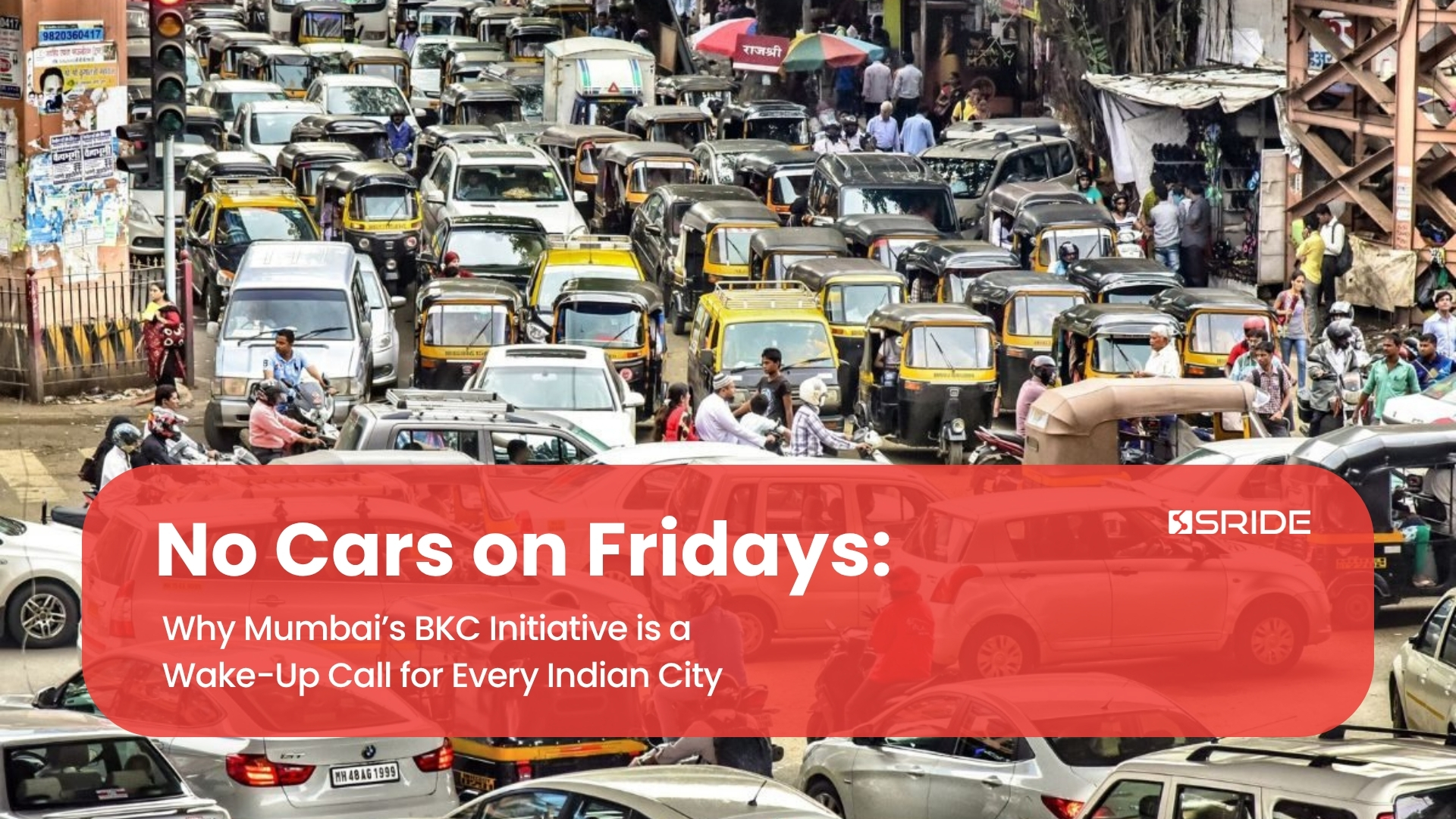
What if the answer to India’s urban traffic crisis isn’t wider roads or more flyovers — but simply choosing not to drive?
That’s the bold question at the heart of a new initiative from Mumbai’s Bandra Kurla Complex (BKC) — one of India’s most prestigious and congested business districts. The BKC Authority has officially requested over 2 lakh working professionals to leave their private vehicles and cabs at home every Friday and rely instead on public transport. No mandates. No penalties. Just a collective call to action.
It sounds simple. But the implications run deep — for Mumbai, for India’s fast-growing cities, and for every professional who has spent hours stuck in gridlock asking, “There has to be a better way.”
Understanding BKC: India’s Manhattan, Paralysed by Its Own Success
Bandra Kurla Complex is no ordinary business district. Spread across approximately 370 hectares in the heart of Mumbai, BKC is home to the Reserve Bank of India, SEBI, India’s leading private banks, multinational corporations, consulates, and dozens of premium commercial towers.
On any given weekday, over 5 lakh people enter and exit BKC — employees, vendors, visitors, delivery personnel. The internal roads, though well-planned by 1990s standards, were simply not designed to absorb this volume. The result? Chronic gridlock that can turn a 3-km commute within BKC into a 45-minute ordeal.
“BKC was built to be Mumbai’s future. But it’s becoming a victim of its own success.”
— Urban transport analyst, commenting on BKC’s infrastructure challenges
A 2023 TomTom Traffic Index ranked Mumbai as one of the most congested cities in the world, with commuters losing an average of 108 hours per year to traffic — a bitter irony for a district designed to drive economic productivity.
The “No Cars on Fridays” Initiative: What It Actually Involves
The initiative, driven by the MMRDA and BKC stakeholders, is a voluntary mobility pledge. Participating organisations encourage — and in some cases incentivise — their employees to commute via:
🚇
Mumbai Metro
Lines 2A and 7 connect western suburbs to BKC-adjacent stations
🚌
BEST Buses
AC buses on dedicated BKC routes throughout the day
🚗
Carpooling
With colleagues from the same neighbourhood or corridor
🚲
Cycling
For those within 5–8 km using BKC’s cycle track network
The ask is modest: just one Friday per month to begin. But the intent is to build a habit — to demonstrate that the city can function, perhaps better, when private vehicles don’t dominate every lane.
Several large employers in BKC have already signalled support, offering subsidised Metro passes, flexible WFH options on Fridays, and recognition programmes for teams with the highest participation rates.
The Bigger Problem: India’s Cities Are Running Out of Road
The BKC initiative is a microcosm of a challenge playing out across every major Indian city. India adds approximately 20 lakh new vehicles to its roads every month. Vehicle ownership has more than doubled in the last decade. Meanwhile, urban road networks — constrained by land availability, encroachment, and financing — simply cannot keep pace.
₹60,000 Cr
Lost by Delhi annually to traffic congestion in productivity & fuel
< 18 km/h
Bengaluru’s average peak-hour speed — slower than a bicycle on a clear road
1.5B hrs
Wasted by India’s urban commuters annually — stuck in traffic
13–14%
Of India’s total greenhouse gas emissions come from transport
Hyderabad, Pune, and Chennai are on similar trajectories as IT corridors expand faster than road capacity. The environmental cost is equally severe — in cities like Delhi, vehicular pollution contributes to PM2.5 levels that regularly breach safe limits by 10–20 times during winter months.
Why Building More Roads Is Not the Answer
For decades, the standard policy response to traffic congestion has been to build more infrastructure: wider roads, more flyovers, more underpasses, more parking. But transport researchers have identified a phenomenon called induced demand — the more road capacity you build, the more vehicle trips are generated to fill it, ultimately returning congestion to the same or worse levels.
🌏 Two Cities, Two Lessons
Los Angeles spent billions on freeway expansion through the 1980s and 1990s. Today, it remains one of the most congested cities in the United States.
Seoul demolished an elevated highway and replaced it with a restored stream — and traffic actually improved because commuters shifted to public transport and carpooling.
The lesson: infrastructure supply alone cannot solve a demand problem.
What Other Cities Around the World Are Doing
Mumbai is not alone in exploring demand-side solutions. Cities across the world have implemented car-free days, congestion pricing, and shared mobility incentives — with measurable results.
🇨🇴 Bogotá, Colombia
Has run “Día sin Carro” (Car-Free Day) since 2000, banning private vehicles city-wide for one day each year. Studies show it reduces air pollution by up to 40% on that day and has contributed to a long-term culture shift toward cycling and public transport.
🇫🇷 Paris, France
Introduced car-free Sundays in central Paris and progressively reduced parking while expanding cycling lanes. The city aims to be largely car-free in its historic centre by 2030.
🇸🇬 Singapore
Uses Electronic Road Pricing (ERP) to charge drivers entering congested zones during peak hours — effectively pricing private vehicle use to reflect its true cost to the city and its citizens.
🇬🇧 London, UK
Introduced a Congestion Charge in 2003 for central London, reducing traffic by 30% in the zone and generating revenue reinvested directly into public transport upgrades.
Each of these interventions has one thing in common: they work best when they make the sustainable choice easier and more attractive — not just when they make driving harder.
The Role of Carpooling: The Missing Middle
Between the private car (high comfort, high cost, high congestion impact) and public transit (high capacity, sometimes low comfort or last-mile gaps), there is a powerful middle ground: carpooling.
The Math Is Simple
1 car carrying 4 colleagues from the same neighbourhood to BKC = 3 fewer cars on the road.
Multiply that across even 10% of BKC’s 2 lakh professionals, and you’re looking at tens of thousands of fewer vehicle trips each Friday — with no new infrastructure required.
Carpooling also addresses the most cited barrier to public transport adoption in Indian cities: the last-mile problem. Metro stations and bus stops are often not within comfortable walking distance of homes or offices. A carpool can bridge that gap while still dramatically reducing the number of vehicles on the road.
The economics are compelling too. A Mumbai professional spending ₹4,000–₹6,000 per month on fuel and parking in BKC could halve that cost by sharing a commute with just one colleague. Scale that saving across a year, and it’s real money back in the household budget.
sRide’s Role in India’s Shared Mobility Story
At sRide, we’ve spent years building the infrastructure for exactly this kind of shift. Our platform connects over 3 million commuters across India’s major cities, enabling daily carpooling between colleagues, neighbours, and co-directional commuters who would otherwise each drive alone.
Initiatives like BKC’s “No Cars on Fridays” validate everything the shared mobility movement has been working toward. When large employers endorse carpooling — when it becomes a recognised, incentivised, culturally accepted choice — adoption accelerates. The network effect kicks in: more people looking for carpool matches means more matches available, which brings in more people.
We’ve seen this play out in corporate campuses and tech parks across Bengaluru, Hyderabad, and Pune, where sRide has partnered with employers to reduce their parking footprint, cut corporate transport costs, and lower Scope 3 emissions — all while improving the daily commute experience for employees.
The BKC corridor is a natural next frontier. The density of professionals, the shared work schedules, and the geographical concentration of residential areas feeding into BKC make it one of India’s highest-potential carpooling zones.
What Can You Do — Starting This Friday?
You don’t need to wait for a government mandate or a corporate incentive programme to make a difference. Here are five practical steps any professional can take:
01
Download sRide
Check if any colleagues or neighbours share your commute corridor. You might be surprised how many people travel the same route at the same time — alone.
02
Talk to Your HR Team
Start a carpool programme at your office. Many companies are looking for low-effort sustainability initiatives — this one practically runs itself once a community forms.
03
Try the Metro Once
If Mumbai Metro Line 2A or 7 is within reach, give it a genuine try on a calm Friday morning. You might find it faster, cheaper, and far less stressful than you expected.
04
Advocate Internally
If your company has offices in BKC, suggest they join the “No Cars on Fridays” pledge. Peer pressure works — in the best possible way — when sustainability is involved.
05
Share This Conversation
The more people who understand the scale of the problem — and the simplicity of the solution — the faster we move from individual choices to collective momentum.
The Future of Urban Mobility Is Already Here — We Just Need to Choose It
Mumbai’s BKC initiative will not solve India’s traffic crisis on its own. No single policy, app, or awareness campaign will. But it represents something important: a recognition, from the heart of India’s financial establishment, that the status quo is unsustainable.
The roads of 2030 will be shaped by the choices made in 2026. Every professional who carpools to work, every company that subsidises a Metro pass, every city that prices congestion honestly — each adds to a momentum that compounds over time.
The technology exists. The infrastructure is improving. The economic case is clear. What remains is the hardest part: changing a habit. And that change starts with a single commute — perhaps this Friday.
The future of urban mobility is not more infrastructure alone, but smarter choices. And smarter choices begin with choosing to share.
Start carpooling with sRide
Find verified co-passengers on your exact route. Download the app and share your first ride.