
Office Carpooling: A Complete Guide for Companies (2026)
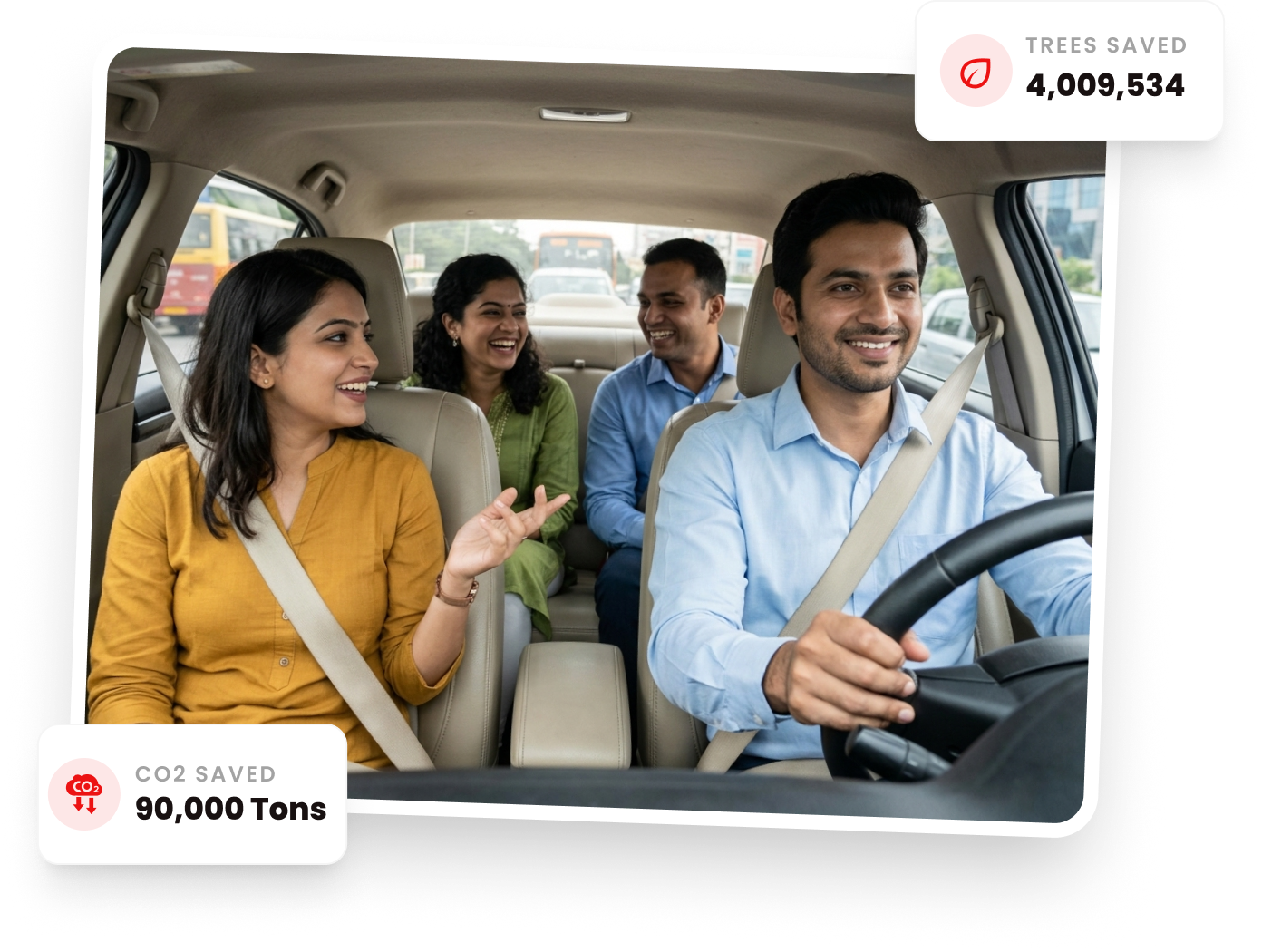
Office carpooling is one of the highest-impact, lowest-cost employee benefits a company can offer in 2026. It cuts commute costs, eases parking pressure, reduces carbon emissions, and helps employees arrive less stressed and more productive. As Indian cities grow more congested and companies double down on sustainability and return-to-office, corporate carpooling has moved from a perk to a strategic priority. This complete guide explains what office carpooling is, why it works, the benefits for employees and employers, and exactly how to roll it out at your organisation with sRide.
3M+
sRide users
300+
companies onboarded
₹5,000
avg monthly saving
4.8★
app rating
What Is Office (Corporate) Carpooling?
Office carpooling is an arrangement where employees travelling on similar routes at similar times share a single vehicle — a car or a two-wheeler — instead of commuting alone. In a corporate programme, this is organised at company scale: employees are matched with verified colleagues, costs are split fairly, and the organisation supports adoption through policy, incentives, and tools like sRide. The result is fewer cars on the road, lower costs for everyone, and a measurable reduction in the company’s commute-related carbon footprint.
Why Office Carpooling Matters in India (2026)
India’s metros consistently rank among the world’s most congested cities. The average IT-corridor commuter in Bangalore, Hyderabad, Pune, or Delhi NCR loses 60–90 minutes a day to traffic and spends ₹8,000–₹12,000 a month on fuel, tolls, and parking. For employers, that translates into late arrivals, burnout, overflowing parking lots, and a large — often unmeasured — Scope 3 emissions liability. Carpooling addresses all of these at once, which is why 300+ companies already run employee commute programmes on sRide.
Benefits of Office Carpooling for Employees
- Lower commute costs: splitting fuel and tolls with 2–3 colleagues saves up to ₹5,000 a month.
- Less stress, more time: alternate driving days mean some mornings you simply relax, read, or prep for work.
- Reliable arrivals: a committed pool is more dependable than waiting for autos or surge-priced cabs.
- Networking: rides become a chance to build relationships across teams and seniority levels.
- Safety: every co-rider is workplace-verified, with live tracking and an in-app SOS button.
Benefits of Office Carpooling for Employers
- Sustainability & ESG: each shared ride removes a car from the road, directly cutting Scope 3 (employee commute) emissions — a reportable, defensible ESG win.
- Reduced parking pressure: fewer single-occupancy vehicles means fewer parking complaints and lower facility costs.
- Higher productivity & punctuality: calmer, more predictable commutes mean employees arrive on time and ready.
- Talent attraction & retention: a funded commute benefit is a tangible perk that improves employee experience.
- Smoother return-to-office: easing the commute removes one of the biggest friction points in RTO mandates.
- Zero cost to deploy: sRide is free for commuters, so companies can launch without per-seat licensing.
ESG reporting tip
sRide programmes generate ride-level data you can aggregate into a commute-emissions estimate — useful for BRSR / sustainability disclosures and internal carbon dashboards.
How Much Can Employees Save?
A typical solo car commuter on a 20 km each-way route spends roughly ₹8,000–₹10,000 a month on fuel and tolls. Sharing that ride with two colleagues can cut the per-person cost by 60–70% — often ₹5,000+ in monthly savings, or ₹60,000+ a year. Two-wheeler bike-pooling is even cheaper. The savings compound across a workforce of hundreds.
How sRide Corporate Carpooling Works
sRide matches employees travelling on similar routes at similar times and lets them connect, ride, and split costs — all inside one app.
- Smart matching: employees enter their home and office locations once; sRide surfaces compatible pool partners on the same route and schedule.
- Verified profiles: riders sign up with their work email, so colleagues share rides with verified professionals — not anonymous strangers.
- Recurring rides: set a weekly schedule once and sRide keeps the pool running automatically.
- Fair cost-split: the app handles the math so contributions are transparent and equitable.
- Carpool, bikepool, or taxipool: employees choose the mode that fits their route and budget.
Safety & Trust
Safety is the single biggest factor in carpool adoption, and it is built into sRide:
- Workplace verification — ride only with verified colleagues and professionals.
- Live ride tracking — share your trip status in real time.
- In-app SOS — one-tap emergency assistance.
- Profile ratings & reviews — build a trusted community over time.
- Women-friendly options — preferences that help women commuters ride with confidence.
How to Launch Office Carpooling — A Step-by-Step Playbook
- Secure leadership buy-in: frame carpooling as an ESG + employee-experience + facility-cost win, and assign an internal champion (HR, Admin, or Sustainability).
- Get your team on sRide: share the app and encourage sign-ups with work email during onboarding and via internal comms.
- Map common routes: identify clusters of employees commuting from similar areas and time windows to seed the first pools.
- Launch with a pilot: start with one campus or one large residential cluster, gather feedback, and refine before scaling.
- Incentivise adoption: reserved parking for poolers, recognition, commute allowances, or leaderboard rewards.
- Communicate continuously: success stories, savings milestones, and reminders keep momentum high.
- Measure and celebrate impact: track rides shared, money saved, and CO₂ avoided — then publicise the wins.
Incentive Ideas That Drive Adoption
- Priority / reserved parking spots for active carpoolers.
- Monthly recognition or small rewards for top poolers.
- A commute allowance or fuel-card top-up for verified shared rides.
- Team challenges and leaderboards across departments or campuses.
- Highlighting savings and CO₂ impact in company-wide dashboards.
Measuring Success: KPIs for a Corporate Carpooling Programme
- Adoption rate — % of employees signed up and actively pooling.
- Rides shared per week/month — the core activity metric.
- Cars removed from the road — proxy for parking and emissions impact.
- CO₂ avoided — for ESG / sustainability reporting.
- Employee savings — aggregate ₹ saved across the workforce.
- Satisfaction — pulse surveys on commute experience.
Companies Already Carpooling with sRide
300+ organisations use sRide for employee commute across India’s tech and finance hubs. See how it works in practice: how KPIT employees in Pune are saving time, money & stress, and the commute revolution at BNY.
Carpooling Across Your City
Office carpooling works best when paired with strong city coverage. Explore dedicated guides for carpooling in Bangalore, Hyderabad, Chennai, Delhi NCR, Pune, and Mumbai — or set up bike pooling for two-wheeler commuters.
Bring Carpooling to Your Office
Free for commuters • Workplace-verified profiles • Live tracking & SOS


Frequently Asked Questions
What is corporate carpooling?
Corporate carpooling is a company-organised programme where employees on similar routes share rides instead of commuting alone, supported by policy, incentives, and an app like sRide.
Is office carpooling free for employees?
Yes — sRide is free for commuters. Employees only share the actual cost of fuel and tolls with their pool partners.
How does sRide keep carpooling safe?
Every user is workplace-verified, and rides include live tracking, an in-app SOS button, and profile ratings. Women-friendly preferences are available.
How much can employees save by carpooling?
A typical commuter saves up to ₹5,000 a month — often ₹60,000+ a year — by sharing fuel and toll costs with 2–3 colleagues.
How do we start a carpooling programme at our company?
Assign an internal champion, get employees onto sRide with work email, map common routes, run a pilot, add incentives, and measure impact. The playbook above walks through each step.
Does carpooling help with ESG / sustainability goals?
Yes. Employee commute is a major Scope 3 emissions source. Carpooling removes cars from the road and produces ride-level data you can use for ESG and BRSR reporting.
Can two-wheeler riders participate?
Absolutely. sRide supports bikepooling, which is the cheapest way to commute and ideal for short city routes.